A NOTE ABOUT THIS EPISODE
I recorded this episode in July 2020, during the pandemic. It opens and closes with a sponsor message for my Windhaven Witches series, invites you to my Facebook group and promises to share my 2021 plans. Those parts are out of date. The advice about breaks and rest is still how I think about burnout.
SUMMARY
Rapid release burnout looks a lot like author overwhelm, with one big difference: the condensed speed. As rapid release authors we're constantly writing, editing or marketing, often all at once, so burnout can drain your energy and creativity before you notice it's happening.
I share how I know it's arriving for me. I start to dread sitting down at the computer, then my brain refuses to focus, and a 45-minute task turns into an afternoon. I explain why your brain needs breaks, and the research I mention suggests a short break every 50 to 90 minutes.
I also talk about what actually counts as a break. Working out, walking, having a conversation or meditating count. Switching to a podcast, a how-to book or cover work does not, because it pulls your thoughts back into author work. I describe one study that suggests 52 minutes of work followed by a 17-minute break, and say to aim for 15 to 20 minutes either way.
Then I zoom out to longer breaks: travel at least once a year, ideally twice, with a goal of 30 to 45 days of vacation or travel a year. I cover three benefits I see in travel (creativity, stress relief and productivity) and end with a reminder that rapid releasing is a tool, so money can't be the only reason you do it.
WHAT YOU'LL LEARN
- How rapid release burnout differs from author overwhelm
- The early warning signs I watch for in myself
- How often to take breaks, and what counts as a break (and what doesn't)
- A vacation and travel goal for the year, and the three benefits I see in travel
- Why money can't be the only reason you rapid release
UPDATE FOR 2026
Today I teach rapid release as a pace you set, and slower is a fine choice. The break and travel numbers come from studies I mentioned in the episode, so treat them as starting points and check the sources yourself.
KEEP LISTENING AND READING
- Is rapid release right for your books?
- How do I avoid rapid release burnout?
- Is There Such a Thing as Sustainable Rapid Release?
WANT THE FULL PLAN?
Rapid Release Roadmap walks you through the six-week sprint and a pace of about four books a year. You set the pace. If you'd like everything I teach, the Library Pass opens all 23 masterclasses for a one-time $97.
FREQUENTLY ASKED QUESTIONS
How is rapid release burnout different from author overwhelm?
I say it comes down to the condensed speed. Rapid release authors are constantly writing, editing or marketing, often all at once, and burnout draws down the creative well.
What are the first signs of burnout?
For me, the first sign is dreading sitting down at the computer or wishing I could be anywhere else. If I push past that, my brain starts to seize up and a 45-minute project can take all afternoon.
How often should I take breaks?
The research I mention suggests a short break every 50 to 90 minutes. One study I cite found 52 minutes of work and a 17-minute break worked best, and I say to aim for breaks of about 15 to 20 minutes.
What counts as a break?
Working out, going for a walk, having a conversation and meditating count. Listening to another podcast, reading for research or switching to a different author task does not, because it keeps your mind on your work.
How much vacation or travel should I plan?
I say the goal is 30 to 45 days a year of vacation or travel, with two longer trips of about 8 to 14 days and several shorter breaks of 1 to 3 days. I recommend traveling at least once a year, and ideally twice.
Should money be my only reason to rapid release?
No. I say rapid releasing is a tool to help you build your audience and income, but it can't be the only reason you do it, or you'll wear yourself out trying to keep up the momentum.
Read the full transcript
Edited for readability. Passages from the original recording that are out of date have been left out and are marked in brackets.
Hello again and welcome back to the Author Revolution podcast. I'm your host, international bestselling indie author Carissa Andrews and CEO of Author Revolution, the author source for all things Rapid Releasing.
[Out-of-date promotional section from the original recording removed.]
Okay, so for those of you who tuned in last week, you know that I didn't actually do a full on podcast episode. My family and I took the week off to spend some quality time together and just kind of chill out before all the craziness comes in September.
I'm not just talking about the launch of the Windhaven books either. School will start in September and it's bound to be a crazy time no matter which way you look at it. So we still have no idea what school is going to be looking like this fall, and right now I'm a little scared to find out. In fact, I even took a survey today to try to help my kids school determine whether or not they want to do online courses, in-person courses, or a hybrid of both.
So we'll see what happens up happening. At any rate, though, my family and I, like I said, we went camping so that we could remind ourselves why we only go camping every so often, every few years. As a matter of fact, the last time we went camping was in 2016, and on the way home, I actually found out that my brother was in the hospital with those tumors coming back. So this year it was just basically a cluster of epic proportions.
Day one. My husband, Colin, ended up with a migraine, and we ended up having to go and get a new pump up bed in the middle of everything, leave kids to set up tents. It was a disaster. Then he ended up pulling his back out.
So by day two it was hurting too much and we had to come back so that he could get everything looked at. Needless to say, camping in us, we're just not mixing things. So it should have been a two and a half day camping excursion actually turned out into being 24 hours in and out, with a bonfire at home and an afternoon boat ride with, I might add, a massive storm heading our direction. Colin has mentioned that we should go camping again, maybe once more before September.
I'm a bit dubious about all of that, but we shall see. So needless to say, I started the podcast, last year, and last week was the first time I decided to kind of skip it. Now, granted, I can't really skip things, so it's just not in my blood. Which is why I ended up leaving you a little mini episode with the why and a few tips on why you should probably take some time off as well.
Hopefully it was helpful enough to get you by, but this week I actually wanted to expand on it. Today we're going to be talking about rapid release burnout, what it is, why it sucks, and how to combat it. Sound good? Excellent.
In a lot of ways, this is like author overwhelm, I guess, because most of the same rules apply. We're still authors. We're still dealing with a ton of balls up in the air, and the way that it's different in my mind really comes down to the condensed speed of it all. Even authors who publish one book a year can experience all their overwhelm and probably, to be quite honest, burnout.
But when you amp up your game and start rapid releasing, it really is a whole new ballgame. Now, I've talked about author overwhelm in the past, so for those of you who may not have listened to that episode, I'll make sure to link to it in the show notes. It was episode 13 which aired back in January. There are nine tips in there to help you deal with overwhelm, plus a bonus one for those of you who listen all the way to the end.
So for the sake of not going over the exact same material, and especially so soon, I'm not going to talk about those tips. So make sure you do go back and listen or refresh on them if you need them. Okay, so how does rapid release burnout differ from regular old author overwhelm? Well, from what I've experienced, it's really a drawing of the creative well, burnout zaps your energy creativity.
And if I am completely honest, and definitely your patience, just ask my kids. Granted, I am doing all of this during the coronavirus pandemic and my kids have been home since March, so that might play into things just a wee little bit. As rapid release authors, though, we are constantly in a state of motion. There is never really a time when we're not writing, editing or marketing.
Often all of them at the same time. So if you add on top other jobs, side gigs, kids, other family and friend obligations, you might not even realize burnout is biting you in the butt until you've been yelping in pain for like a week. You feel me? Okay, so throughout the past ten years, I haven't really had the time or money to go on expensive vacations or getaways.
In fact, I haven't even been on a honeymoon yet with my husband, and we've been married for eight years. Burnout has been a companion of mine for at least the past five years, but one that I'm actively working on eliminating through more intentional living and a more intentional way of life. And I hope that you can learn from my mistakes, especially if you plan on rapid releasing as a part of your publishing strategy for any period of time. Now, the way that I know when I'm reaching burnout is when I start to dread sitting down at the computer, or I wish I could be anywhere else but home, that's truly the first sign.
Then, if I push past those first warning signs, I find my brain just starts to seize up and it does its own thing, often refusing to focus on the task at hand. So what would normally have been, say, a 45 minute project actually turns into an all afternoon sort of deal. And I'm mostly just sitting here staring at my computer, wishing it would just do itself right. Now it's mostly because I'm just not focused, and it's not for lack of trying, however, so this isn't a procrastination sort of thing.
I'm actually actively sitting here trying to get things done, but my attention just isn't able to focus in on what I want it to do, no matter how much caffeine. Quite honestly, I try to throw at it. It's a full on burnout thing, and what it does is it blocks everything that you're trying to do and makes it drag. So here's the thing.
Your brain actually needs a break, and the longer you deprive it of that break, the harder it is to stay on task. Studies have shown that even on the daily, you need to be taking a short break every 50 to 90 minutes or so to be able to help increase your energy, your stamina, and your overall productivity. Now, when you don't get it, your work starts to suffer and so does your happiness. I don't know about you, but I'm pretty sure my creativity springs from my joy.
If I am not happy, I don't write well. In fact, I usually end up getting sick and then my characters all sound like they're pissed off at the world and they want to do a big Thanos snap to everyone, and everything is not good. So what do we do to avoid this kind of burnout in the first place? Well, obviously the first thing we need to do is be more intentional about taking breaks to start with.
Daily breaks throughout the workday are a must and something I am working on myself. It's not always easy, though. You'd think it would be. You know, walking away from the computer and just doing something that's different for a little bit.
But when you're in the zone, it's hard to break that concentration to go unwind for a bit. And this is especially true when you're working for yourself and not for someone else. We really are our own worst boss, I'm telling you. But I found that the more you force yourself to take those breaks, the better your productivity is.
And hopefully you will too. Which is why I continue to make them a priority in my workday. I'll be in the middle of doing this podcast, for instance, and I got the script written, my ideas written down, my outline ready, and I rather than going straight into recording it, I walked away, did a workout, and now I come back and I'm ready to record and hopefully get this the rest of it done for the day. So at this point, you might be saying, okay, that's great, Carissa, but what would I do to, you know, actually take a break?
What does that mean? You would think people know what taking a break means, but you don't. I know I don't, because there was a time when I would just go from working on my book to then taking a break from that and working on a cover, or listening to a podcast about how to market. Those are not breaks.
People work out, go for a walk, have a conversation, meditate. Take it from me. You need to get up and away from your computer or any other electronic device around you. I don't care if it's your phone, your Kindle, whatever.
Don't go over notes, listen to other podcasts, other podcasts, whatever. That was one of my big ones. I would switch from doing what I was doing to then trying to learn something new. Don't do that.
Don't read books unless they are for absolute pleasure. They're not for research of any kind. Basically, avoid anything that's going to pull your thoughts back into your author work. The point here is to be using a different area of your brain, and actually to give a lot of your brain some time to just relax, because as an author, you're constantly in your head and you're constantly thinking of things that need to go on, whether it be editing, writing, designing, marketing, all of those things take a lot of brainpower, and you need to be able to just walk away and do something completely different that doesn't require so much attention.
Now, if you're working for another job, for instance, on top of your rapid release schedule, all of this stuff still applies. Look, we can do both, but it means that our time as an author is also then split by something else that's vying for our attention. So the potential for burnout actually increases because you're likely to go gangbusters at one job, then try to continue the momentum in on your writing and everything that you're trying to do for Rapid Releasing. You need to be realistic and set those realistic expectations for what you can accomplish while including breaks into that time frame.
If the 50 to 90 minute rule doesn't really work for you, meaning that after 50 minutes or 90 minutes, somewhere in that time frame, you take that 15 minute break or take a break. Find a rhythm that does work for you. One study actually does suggest that the best method is 50 minutes of work, or actually 52 minutes of work, with a 17 minute break in between. Set a timer if you have to, and just remind yourself that when it's time to stop, you get up and you move around.
Regardless of how you do your breaks, though, ideally they should be that 15 to 20 minutes. No more than that if possible, but lunch is obviously something a little bit different. Now, more than that, there are also studies that show that you should be taking even longer breaks away from your home, away from your normal routines, through traveling. Now, you should be traveling hypothetically at least once a year and ideally twice a year.
In fact, they even go so far as to say that when you don't travel, you are reducing your life expectancy. Part of the reason for this is due to the fact that most of us aren't getting enough exercise throughout our days, so our cardiovascular health decreases, thus making it more likely that we'll die early. So that's not good. But also when we increase our stress levels and we don't find a good way to be able to eliminate the stress via travel and doing something that just allows us to decompress our bodies, take on all of that extra stress, and it ends up reducing our lifespan that way as well.
Not good. We have too many books and stories to write, and we need to find ways to be able to do them for a long time in the future. So my advice is to get out there and travel the world. It's one that I am going to be implementing more into my own life in 2021, even if it means just traveling to a campground and spending a week in the woods.
Yes. Damn it, I will make it a full week. If it kills me, maybe it will. Oh, in total, the goal is to actually have 30 to 45 days spent on vacation or travel per year.
Now, this means you have to have hypothetically, two longer vacations of 8 to 14 days or so each, and then you take multiple small breaks spread throughout the year in 1 to 3 day increments. Now, I can tell you right now I have royally sucked at this one. And I like I said earlier in the podcast, my family hasn't always been rolling in the dough. Not that we are now, but we are doing much better than we were, and we're in the process of trying to figure out how we can incorporate more time off into our lives so that we can enjoy not only getting out and traveling, but enjoy time with each other as well.
Plus, on top of it, Colin and I are both self-employed 100%, and we have been since 2014. So like I said, we are our own worst boss and it means that it's been very difficult to be able to walk away from anything that we wanted to accomplish for a year or for a particular quarter or whatever the case might be. So with all of this, it's made it not only hard to take days off in general, because it's not like we get paid time off or anything, but to also afford going anywhere, because then you have to pay for wherever it is you're going.
[Out-of-date detail removed.]
We'll see.
Okay, so what exactly are the benefits of traveling? I am so glad you asked. The first one is obviously our creativity boost, which is something that does not go a mess with us authors, right? Not only do we write better, but we feel more connected to our stories and our life experiences that we obtain when we're out traveling and doing something besides work actually helps us to create a more rich and colorful world in our books.
And not to mention, it gives us fodder for things that maybe we can write or ideas that we might stumble upon. There's a wealth of different things that can happen through travel that can impact our stories. Okay. Number two is stress relief.
This is a big one and probably the most important one for me. There has been a lot of stress as to being an indie author, and even more, when you start to turn into the rapid releasing realm, you need to find that outlet that really helps you decompress. Otherwise, stress will mount. And eventually, like I said, it can lead to bad things like heart attacks, stroke, and other health nasties.
Plus, it can actually pack on the pounds thanks to the increase in cortisol in the body. Not a good thing. Okay. And number three, this is one that I actually think is the biggest one.
That helps me remember to keep doing it. I've always been a creative person, even if I'm stressed. I've always been able to find little ways to stress relief, even if I'm stressed. But when I can't push past my productivity point, when when my brain starts shutting down and burnout really takes hold and I'm, like, angry at everyone, that's a problem.
So number three is productivity boost when you do have a lot to do. The last thing you need is to have a week's worth of downtime staring at your cursor on your screen, and that's all you're doing. Even though you're trying to accomplish something important, your time, that time is actually better spent than on a vacation somewhere else. Then when you come back, your productivity actually has been noted to improve dramatically.
You can actually be just as productive as you would have been had you just sat there at your computer that whole time so you can get back on track. You rock your to do list with that renewed sense of purpose, all because you took time away and you gave yourself the grace to be able to decompress and de-stress throughout whatever time frame you're going to go on vacation for. So overall burnout is your body and your mind's way of saying that it's reached max capacity for how much it can do, and it needs time to unwind. I think there was a really cool quote and I can't remember who said it, but it was.
Everything works better when you unplug it, even yourself or something along those lines. That is so true. So unplug yourself, go away and just reset for a bit. Rapid releasing books can certainly bring on the workload and on the stress and on all of the craziness.
And if you're not careful, it can definitely lead to some serious problems down the road. So one of the biggest pieces of advice I can give you when it comes to this rapid release world and rapid releasing your books is this. I want you to find a better way than money. Now, I've seen a lot of authors go down in flames because they started the rapid release track, because they saw monetary results, and then they started to feel trapped by their own successes through rapid releasing.
Whether that be their editorial calendars and their monetary goals, the way that they were earning money from before versus what they're earning now, if they see that their sales are slacking, or if they felt that things weren't going fast enough, they put undue pressure on themselves to perform. So don't do that. Rapid releasing is only a tool, and it's one that's meant to help you build your audience and income. Yes, but it cannot be the only reason that you do it.
Or you will end up killing yourself trying to keep up the momentum. We've just entered the third quarter of 2020, and by the fourth quarter, I want you to be thinking about 2021 and how you're going to leverage vacation time and breaks into your year so that you can wrap it really successfully, but keep it all balanced, too, so that you can keep a level head and keep calm and keep cool. Deal? I will be doing the same.
[Out-of-date detail removed.]
Okay guys, so that's all I have for you today. Even after such a hectic and maybe not so relaxing camping trip last week, I do still feel better having broken away from my normal routine for a few days. I know more time will and would have been better, and I'm committed to making that really happen for next year.
[Out-of-date promotional section from the original recording removed.]
[Out-of-date promotional section from the original recording removed.]
All right, guys, until next time, I want you to go forth and start your Author Revolution.
LISTEN TO THE PODCAST
Listen on Buzzsprout or find it on your favorite podcast platform.
Free download
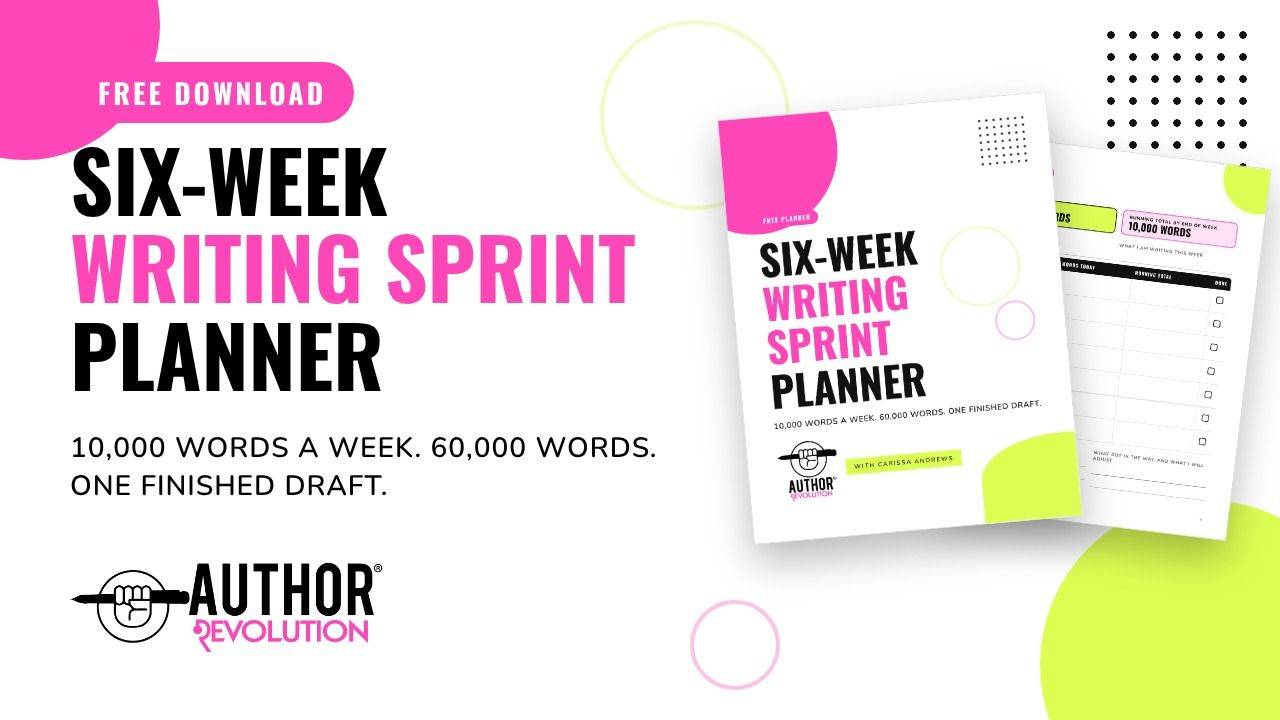
Six-week writing sprint planner
A printable planner for the six-week sprint I teach: about 10,000 words a week toward a 60,000-word first draft.
- Set up your book, your dates and your writing days
- A page for each of the six weeks, with a daily word log
- A finish-line page for what worked and what's next
It lives in your dashboard, so you can print a fresh copy for every book.
Keep learning how I teach
Short, practical posts on planning a series, finding a pace you can keep, and getting your books found.
- Oct 21, 2026How Many Books Should an Indie Author Publish a Year?Argues there's no single right publishing pace. It offers a five-step calculation for finding a sustainable schedule.Read the post
- Oct 14, 2026NaNoWriMo Is Gone: Your Best Options for November 2026Explains that NaNoWriMo closed in 2025 and lists current November writing challenges. It recommends a six-week sprint as an alternative to a one-month word-count goal.Read the post
- Oct 07, 2026Why Indie Authors Are Hard to Discover (and It's Not Your Fault)Attributes declining discoverability largely to platform algorithms outside authors' control. It suggests building owned channels, making series easy to find through search, and keeping a sustainable pace.Read the post