A NOTE ABOUT THIS EPISODE
I recorded this in the first week of NaNoWriMo 2019, one of my earliest episodes. NaNoWriMo shut down in 2025, and the local write-ins, the cheat sheet and the show notes I mention, plus my request for reviews, are out of date. The five tips themselves still work for any month-long writing push.
SUMMARY
I started my very first novel during NaNoWriMo in 2010 and I've used that energy on several books since. I recorded this in the first week of the 2019 event for anyone who was staring at 50,000 words and feeling like it was too big. My point is that you can only do a small bit at a time, so the way through is one day, then the next.
The first two tips are prep and consistency. I was a pantser and I'm not anymore, but if you haven't prepped, even a couple of hours on an outline, your three acts and your overall story arc will do, and any words on the page beat none. For consistency, I pick the time of day I write and stay as close to it as I can, because your brain starts to get ready at that hour. I aim for the 1,667 words a day NaNoWriMo suggests, but a 512-word day is still 512 words you didn't have before.
Tips three to five are community. Join a write-in, in person or online. Hold yourself accountable by logging your word count every day and watching the graph climb. Celebrate your wins in writing groups, on social media, and with friends and family who will cheer you on, and skip anyone who won't.
I close with something I say in this episode: as long as you believe you can, you will write.
WHAT YOU'LL LEARN
- How to prep for a month-long writing push, even if you're already a few days in
- Why writing at the same time each day helps, and how to handle days you fall short
- How write-ins work, including online options for introverts
- How to hold yourself accountable by logging your word count daily
- Ways to celebrate your wins and who to leave out of your circle
UPDATE FOR 2026
NaNoWriMo shut down in 2025, so the official site, word count tracker and sponsored write-ins I mention are gone. The tips hold up anyway, because prep, a consistent writing time, accountability and community work for any writing sprint, including the six-week writing sprint. Twitter is now X. If you're looking for what to do instead of NaNoWriMo, I put my ideas in this post.
KEEP LISTENING AND READING
- What are the best NaNoWriMo alternatives?
- 3 Reasons Why You Should Plan a Series This Preptober
- What's a Better Alternative to NaNoWriMo? The Six-Week Writing Sprint
- Balancing Writing and Well-Being During NaNoWriMo
- Can ChatGPT be your writing accountability partner?
WANT THE FULL PLAN?
Rapid Release Roadmap walks you through the six-week sprint and a pace of about four books a year. You set the pace. If you'd like everything I teach, the Library Pass opens all 23 masterclasses for a one-time $97.
FREQUENTLY ASKED QUESTIONS
What are the five tips for taking on NaNoWriMo?
Prep, consistency, joining a write-in, holding yourself accountable, and celebrating your wins. I frame them as small, actionable steps, because you can only do a bit at a time and going day by day is the way to go.
Do I need to prep before NaNoWriMo?
I'm a convert to prepping, since I started as a pantser. If you haven't prepped, I say you can still spend a couple of hours in the first week on an outline, the three acts and your overall story arc, then get moving. Any words on the page are better than none, and you'll be faster and able to take on more if you prep a little. I also suggest writing down what you wish you'd prepped for next time.
How many words a day should I write for NaNoWriMo?
NaNoWriMo suggests 1,667 words a day to reach 50,000. I say it's fair game if you don't hit that on some days. I give 512 words as an example: it's still 512 words you didn't have before, and you can spread the rest over the other days as long as you let yourself fluctuate.
Why does writing at the same time every day help?
I say that if you stick as consistently as you can to the same time of day, you train your brain to start kicking in then, much like working out at the same time each day. I suggest using the time you're most creative, whether that's first thing in the morning, lunch time, or after the kids are in bed. I also say that when I skip a day I lose track of where my story was going and have to go back and re-read.
What is a write-in, and do I have to go in person?
A write-in is a chance to sit down and write with other authors, and I mention that NaNoWriMo hosts and sponsors events like launch parties and a day of writing dangerously to catch up on your word count. You don't have to go in person. I say there are online write-ins too, plus Facebook groups and quick sprints on Twitter.
How do I hold myself accountable during NaNoWriMo?
Treat it as something that matters to you. I suggest signing up at nanowrimo.org and entering your word count every day at the same time, then watching the graph move from zero toward 50,000. I say the visual reinforces your progress and connects to the other goals you'll have after the draft, like revision and publishing.
How can I celebrate my wins during NaNoWriMo?
I suggest joining a NaNoWriMo or local writers' Facebook group, tweeting your word count with hashtags like NaNoWriMo, and telling friends and family who will be supportive. I say celebrating along the way is what keeps people from getting discouraged by what they think they failed at.
What if my friends or family aren't supportive?
I say to skip those people for this month. You're looking for encouragement, not discouragement, and I suggest surrounding yourself with people who lift you up and point you toward your dreams.
Read the full transcript
Edited for readability. Passages from the original recording that are out of date have been left out and are marked in brackets.
Welcome back everyone. This is the Author Revolution podcast, and I'm your host, Carissa Andrews. In this episode, we'll be discussing five tips to take on NaNoWriMo with confidence. Now, NaNoWriMo is near and dear to my heart.
I actually started my very first novel during NaNoWriMo 2010, and I've gone on to leverage the energy on multiple books since then. And not only have I found it to be a great exercise and challenge, but it's also an incredible community as we all band together for the common goal of getting our stories on the page. So if you are considering joining NaNoWriMo this year, I really want you to embrace the challenge. Take it on wholeheartedly and know that it is possible to end up at the end of November with your full manuscript, ready to rock and roll, and head into the revisions.
It's such a great feeling to know that you've taken all of that energy and information out of your brain and put it on the page, and now you're ready to do even more with it. So today, I want to give some actionable tips on what to do, how to make sure that you are successful as you take on NaNoWriMo. Because let's face it, it can seem like a big, daunting, monolithic, incredibly crazy thing to do, right? But the good news is, when you break it down into actionable steps, it's not as bad.
And honestly, you can only do small bits at a time. You cannot take on more than you can chew in a single day. So rather than worrying about the entirety of what NaNoWriMo stands for, or what your project or your book stands for are all the things that you think you need to learn. Going one step at a time and taking each day, day by day is really the way to go.
So I'm going to give you five tips that have really worked for me in the past, and I think that they're going to work really well for you if you go ahead and implement them into your NaNoWriMo training. So here we go. Number one, this one's probably going to seem completely obvious, but at the same time, I think you're going to want to really incorporate it because I am a convert. I was a pantser in the beginning and I am no more.
So number one is prep. Yes. So October for the NaNoWriMo people is actually considered prep tober. And there's good reason for that.
It's because most people who are going to take on NaNoWriMo are really thinking about what does their story look like, what's it going to go about doing, what are the challenges? What's the overall arc? What are the three acts going to look like? All of those good, fun things that most writers will think about before they start writing.
So if you haven't done the prep that you needed to do beforehand, don't worry about it. You can still do it in this moment. In this first week of NaNoWriMo, you can sit down, spend a couple of hours really thinking about what it is you want to accomplish. And that comes down to things like outlining.
Find a good outline system that works well for you. Think about the three acts, and if that's all you do, is think about the three acts and your overall story arc. Perfect. Just do that much and get moving on writing.
But I do want you to think about for next time, then what kind of prep needs to go into it? What did you wish you would have prepped for next year? So if you take it on this year and you're planning on taking it on next year, write down what worked for you and what didn't, what you should have prepped for, what you didn't prep for, and go from there, see what happens and see how it unfolds. If it feels best right now to be going by the seat of your pants, then try it.
I mean, honestly, any words on the page are still better than none. So if you haven't prepped, go for it anyway. But at the same time, I do want you to keep in the back pocket the fact that you're going to be faster and you're going to be able to take on more. If you prep a little bit before NaNoWriMo begins.
Good. All right. So number two, this one is really crucial in my world just because my house is a complete crazy mess. So I have five kids in my house.
And sometimes there's more than that, depending on who's friend or girlfriends or whatever are in our house as well. Plus, we've got two husky puppies. They're insane, Aztec and Feral, and it's crazy. If I just left everything up to chance, things would not happen.
But because everything is so crazy, I really lean on Newton's law of motion that things in motion stay in motion. And that really is my my worldview. And so I consider this next step to be one that I have to implement or I will fail. So hopefully it's a good one for you guys as well.
Now this one is called consistency is key. What does that mean? It means sitting down and figuring out what time of day do you want to write? Every single day.
Now I get that you're not going to be able to write at the same time of day, every single day, for the entire month. Things will happen. I mean, we've got Thanksgiving mixed into the whole NaNoWriMo thing. I get it.
But at the same time, if you can stick as consistently as possible to the same time of day, you're training your brain at that time of day to start kicking in. There are a bunch of studies that have been done about how your brain plays around with your routine. And so same thing goes with like workouts. If you work out at the same time of day, every day, your body starts to get used to it.
And so it'll start releasing the chemicals and the hormones in your brain and in obviously throughout the rest of your body to be able to help you function better at that workout. Same sort of situation with writing. The more you can be consistent, the easier your brain can switch those gears and be able to help you really do stuff well. And if you recognize your brain's good times, the times where you are the most creative or the most with it, use those times and leverage them to your advantage.
So if your your best time to write is first thing in the morning, make sure that that is as consistently as possible the time of day that you're writing. If it's actually once the kids are in bed, the rest of the day is done. All of your other responsibilities have finished. That's your time of day.
Go for it. If it's lunch time, whatever. Just make sure that you're using the same time of day to be your base, your hub of when you're going to be writing for NaNoWriMo. Not only will it help you increase your word count, but it will also put you in the right frame of mind.
Now, in that consistency realm, I do want you to think about writing every single day. So NaNoWriMo, they tout this as well that they want you to be writing 1,667 words a day in order to hit that 50,000 word count goal. Okay. And I know some authors will, you know, skip days.
They'll write a whole bunch of words on the weekend only, or they'll, you know, pick and choose which days if they do it. Honestly, as an author and as someone who writes on a daily basis, I can tell you right now that if I skip a day of writing, I don't know where in the heck I was. I have no idea where my storyline was going, and I have completely taken myself out of the flow. And what that does is slow me down.
It keeps me in this state of complete confusion, where I'm having to go back and re read or rework whatever it was that I was working on the last time. So again, my life is busy. I have a lot of different things that are going on, probably more than most. But at the same time, consistency really is key for me.
I can keep everything straight in, in track, in my brain, but I need to have that consistency in order to do it. Because if I have too much of a space between things, it is lost. I have, I've rewritten over that information with something more relevant, and I think that's probably the same with you as well. So I want you to really think about what time of day works best for you, that you can be consistent, that even if only for the month of November, and writing daily and hitting that word count goal daily.
Now, if you don't hit the 1,667 words per day, that's fair game. It happens. Every single author will have a day where it's like, okay, pulling teeth right now I got 512 words and that as much as it's going to get today, hey, man, at least it's 512 words that you didn't have before you started. That means now you can spread that out over however many other days, and you just keep going.
As long as you're able to allow yourself the space to be able to fluctuate with how the days go. Because every day is a little different. You're going to be fine because you've set up that consistent writing habit and you're able to keep going. Okay, I think I've hammered that enough now.
Number three, this one has been really interesting for me. When I first started NaNoWriMo back in 2010, I didn't really know what I was doing. I didn't have a lot of support systems or networks in place, and even though I knew about NaNoWriMo, I didn't actually join the site until after NaNoWriMo was done. I took on the challenge, but I didn't join NaNoWriMo itself NaNoWriMo until after 2010, which is so weird.
But it's what I did anyway. What I want you to think about doing is joining a writing. So a NaNoWriMo sponsored write in, or just creating a write in yourself where they are sponsoring little write ins in your local community to be able to sit down with other authors in your area and write.
[Out-of-date detail removed.]
Anyway, so what you can do is they have like launch parties, they have post launch parties, they have, a day of writing dangerously in order to be able to catch up on your word count goals.
There's all sorts of things that NaNoWriMo hosts and sponsors and helps you to try to create. So if you need that energy, if you need that community to be able to help spring ideas off of, or make sure you're heading in the right direction, definitely think about joining a write in and you can do it online too. Yes, you introverts out there, I totally get it. My husband's an introvert too, so if being in person at a write in sounds like absolute chalkboard fingernails nastiness, then there are write ins that are online as well.
So just look for Facebook groups or whatever would help you. Sometimes I'll do them on Twitter as well. They'll just do, you know, quick sprints or random sprints on Twitter. It's awesome.
Just find what works for you and run with it. Okay, so number four, I want you to hold yourself accountable. This one is big. And it kind of goes back to that.
Consistency is key thing. But when you're holding yourself accountable to that 50,000 words for the entire month, then it really means treating it for yourself as if it is something that is important to you. Because we do and accomplish what's important to us, we only do that. The stuff that really isn't important, we let slide and then whatever comes of it, not a whole lot, right?
So I want you to hold yourself accountable by actually joining nanowrimo.org, signing up with your profile if you don't have one already, and every single day at the same time, maybe it's right after you get done writing and you've had that writing experience of doing it in the morning or doing it at night, whatever. I want you to go on to NaNoWriMo.org, and I want you to actually put your word count for the day. And what you do is you see this little graph that kind of goes up, and you get to see your progress and how your word count goals have gone from zero to that 50,000 word mark and how you're getting closer. And by doing that, the visual not only reinforces the fact that you're making that progress towards it and you're accomplishing something, but it really is a way to connect and reinforce in your brain that this is a goal that you are trying to accomplish, and that you're doing it and it hold you accountable to all of the different goals that you're trying to accomplish with this book in general.
Because once you're done, you're going to have even more goals that you're going to need to accomplish. Revision. The whole concept of editing and trying to get your book on any kind of platform to be able to sell if you're going to be doing indie publishing. So all of these things, they intertwine, and it's very important to get your mindset in place in order to make big dreams happen.
And I know if you're listening to this podcast, you have big dreams and you want to accomplish them. All right. So number five, celebrate your wins. This is taking on NaNoWriMo.
This is a big deal. Okay. There are a lot of writers who will take this on. Maybe they'll struggle, maybe they'll fail.
Maybe they'll stop doing it because they'll get discouraged. And it's usually because they didn't celebrate their wins along the way. They get hung up on the stuff that they failed at or the stuff that they think they failed at. So what I want you to do is really celebrate your wins.
You can do this in a number of ways. You can do it by joining a NaNoWriMo Facebook group or writing a local writer's Facebook group.
[Out-of-date detail removed.]
There are Facebook groups out there that can be huge networks of support to be able to just feel like you are a part of something bigger, and you're not just a writer off on your own little world by yourself floating around, and no one has any idea about it. Okay, next thing you can tweet about it.
There are people tweeting all sorts of crazy stuff. And I'll tell you, one of the things I have found in my experience is that there is no bigger supportive writing community than on Twitter. So if you tweet your word count goals or the fact that you're trying to accomplish this book, or that you're taking on NaNoWriMo or whatever the case might be, and you make sure that your tagging or hashtag writer community or NaNoWriMo or NaNoWriMo 2019, whatever the case is, hashtag those and I will tell you, you will get so many people liking and following your tweets because they want to see you succeed. They're in your shoes, too.
They're trying to do the same thing, and they like to know that other people are in the same boat. So tweet about it. That is awesome. And then not only are you celebrating your win for yourself, but you're getting encouragement along the way because other people are cheering you on.
Two okay, one of the other things that I do recommend is tell your friends, maybe even tell your best friends or your family if you think that they're going to be supportive of you. If, however, caveat they are not supportive. Skip those people. You're not looking for discouragement, you are looking for encouragement, and you want people in your circle, your writerly circle, your little bubble to encourage you to get things done, to make those word count goals, to do what you want to do, to dream bigger.
To know that you can do it. Because as long as you believe you can, you will write. And we talked about that in the last episode. So I want you to really think about everything that you want to accomplish and surround yourself by people who lift you up and who are able to point you in the right direction of those dreams.
All right, guys, that is my episode number two. That's all the things that I have for today.
[Out-of-date promotional section from the original recording removed.]
Anyway, thank you so much for joining me today. I hope you found some of these tips valuable and hopefully actionable, so that you can actually put them to work for this year's Nano event.
[Out-of-date promotional section from the original recording removed.]
All right, stay tuned. Until next time.
LISTEN TO THE PODCAST
Listen on Buzzsprout or find it on your favorite podcast platform.
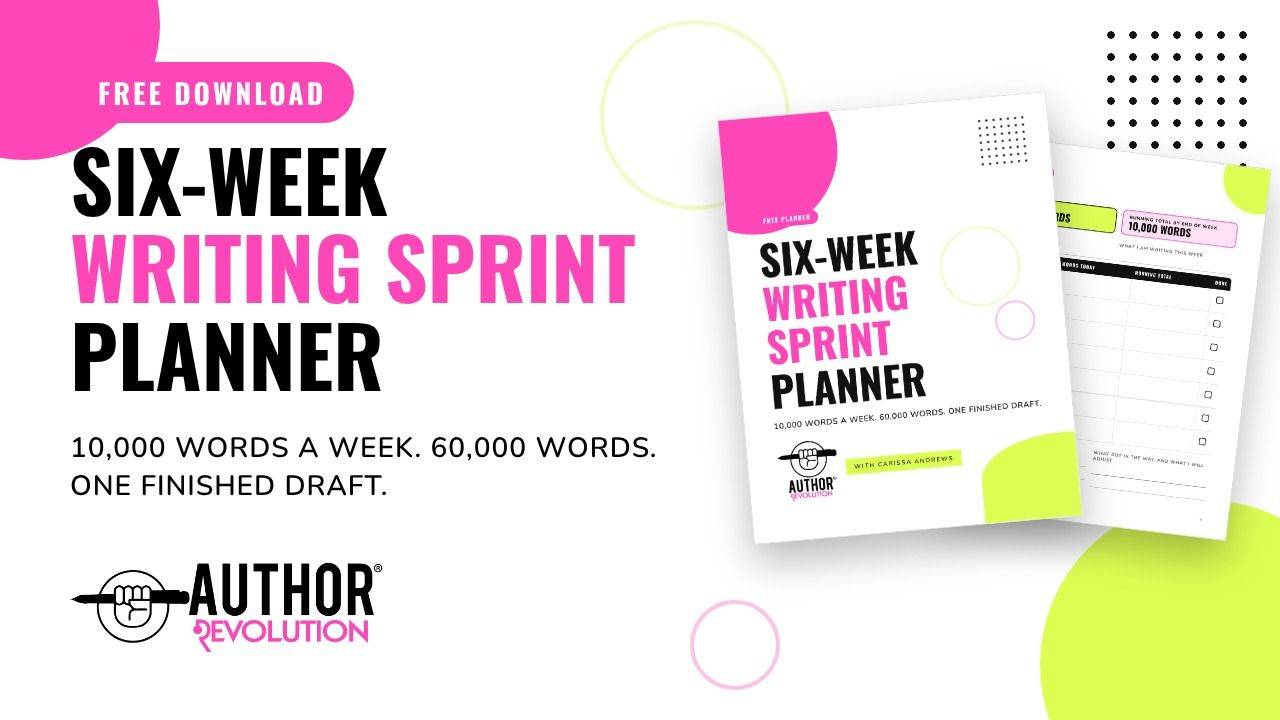
Free download
Six-week writing sprint planner
A printable planner for the six-week sprint I teach: about 10,000 words a week toward a 60,000-word first draft.
- Set up your book, your dates and your writing days
- A page for each of the six weeks, with a daily word log
- A finish-line page for what worked and what's next
It lives in your dashboard, so you can print a fresh copy for every book.
Keep learning how I teach
Short, practical posts on planning a series, finding a pace you can keep, and getting your books found.
- Oct 21, 2026How Many Books Should an Indie Author Publish a Year?Argues there's no single right publishing pace. It offers a five-step calculation for finding a sustainable schedule.Read the post
- Oct 14, 2026NaNoWriMo Is Gone: Your Best Options for November 2026Explains that NaNoWriMo closed in 2025 and lists current November writing challenges. It recommends a six-week sprint as an alternative to a one-month word-count goal.Read the post
- Oct 07, 2026Why Indie Authors Are Hard to Discover (and It's Not Your Fault)Attributes declining discoverability largely to platform algorithms outside authors' control. It suggests building owned channels, making series easy to find through search, and keeping a sustainable pace.Read the post