A NOTE ABOUT THIS EPISODE
I recorded this episode in August 2020, during the pandemic. The sponsor message and preorder details for my Windhaven Witches series, my plans for the Diana Hawthorne books, the Facebook group invite, and the show notes mention are out of date. The big family analogy still works.
SUMMARY
I start with how I first heard about rapid releasing through the 20Booksto50K group, and how my local writers group thought I was a little mental when I brought it up in 2017. I share the quote that keeps me going, that an imperfect plan implemented today is better than a perfect plan implemented tomorrow.
The heart of the episode is an analogy. In the same week, two different conversations compared books to kids, and it clicked as a way to explain how to keep it all straight. Rapid releasing is like juggling a big family: each book is at a different stage and needs a different kind of attention, and you can't pretend one doesn't exist.
I walk through the stages. Your backlist is like your older kids, the book about to launch is your middle schooler, the book in edits is your toddler, the finished book waiting for edits is your baby, the book you're writing is the pregnancy, and the book yet to be written is the one you still think you'll want.
I say that if the juggling becomes too much, a personal assistant can help. I also remind you that rapid releasing isn't for everyone, or even for everyone all the time. Sometimes you need a break. But don't all parents?
WHAT YOU'LL LEARN
- Why I say rapid releasing is like juggling a big family
- The six stages a book moves through, from backlist to the book you haven't written yet
- Why you can't finish one thing before starting the next in a rapid release schedule
- When a personal assistant can help
- Why done is better than perfect
UPDATE FOR 2026
I still think about rapid release this way: every book is at a different stage, and knowing where each one is keeps the schedule moving. Today I teach it as a pace you set, and about four books a year is something you can sustain. Planning and back-end work are also much faster with AI tools than they were in 2020.
KEEP LISTENING AND READING
- What is rapid release publishing?
- How Do You Schedule a Rapid Release Series?
- How do I avoid rapid release burnout?
- Is rapid release right for your books?
WANT THE FULL PLAN?
Rapid Release Roadmap walks you through the six-week sprint and a pace of about four books a year. You set the pace. If you'd like everything I teach, the Library Pass opens all 23 masterclasses for a one-time $97.
FREQUENTLY ASKED QUESTIONS
How do you juggle multiple books at once?
I say it helps to think of your books like a big family. Each one is at a different stage and needs a different kind of attention, and knowing where each is at and where it's headed is crucial.
What is the big family analogy for rapid releasing?
Your backlist is your older kids, the book about to launch is your middle schooler, the book in edits is your toddler, and the finished book waiting for edits is your baby. The book you're writing is the pregnancy, and the book yet to be written is the one you still think you'll want.
Do you write multiple books at the same time?
I tend to write one at a time. In the past I've written multiple books at once, but one will win out and I end up finishing it and going back to the other. I mention another author who writes multiple books at the same time.
Why can't you finish one thing before starting the next?
I say that in a rapid release scenario it can't happen that way, because you're often writing, editing, and marketing at once. Some people struggle to move on until something is 100 percent finished.
When should you hire a personal assistant?
I say that if the juggling becomes too much, that's when you call in the cavalry and hire a PA. I call a good one a lifesaver.
Is rapid release for everyone?
No. I say rapid releasing isn't for everyone, and it isn't even for everyone all the time. Even if you're doing it, sometimes you need a break.
What does done is better than perfect mean for rapid releasing?
I share a quote that an imperfect plan implemented today is better than a perfect plan implemented tomorrow. If I look back and wish I had written a story differently, there's always another book to apply what I learned.
Read the full transcript
Edited for readability. Passages from the original recording that are out of date have been left out and are marked in brackets.
[Out-of-date promotional section from the original recording removed.]
Hi again and welcome back to the Author Revolution Podcast. I'm your host, international bestselling indie author Carissa Andrews and CEO of Author Revolution, the author source for all things Rapid Releasing. So tell me something when you first heard about Rapid Releasing. What were the first thoughts that tumbled out of your mind?
Were you like, hey, that sounds like an incredible idea. Let me jump on board. Are you like me thinking how in the world are they doing it? I first heard about Rapid Releasing when I was a part of, and still am, a part of, the 20Booksto50K group.
Now, I don't know that they were overly calling it Rapid Releasing at the time, but they were just talking about how they were putting out books very frequently. And obviously since then it's grown, and if you're not a part of that group, I do encourage you to check it out. There is some fantastic information out there, and there are so many wonderful people to be able to connect with who are in the same kind of boat as we are now, don't get me wrong. Even though I was wondering how in the world they were doing it.
A quick study and a fast talker, but I wasn't quite sure at that point how to write so quickly and publish a quickly like, I mean, write a book a month or every other month. That just blew my mind. And of course, it instilled some curiosity in me, which is what ended up developing into this, where I wanted to learn as much as possible on how to be able to manage a system like that. Now, I'm an organized person and I am organized by trade, but for me, the concept of being able to rapid release in that manner was just incredible.
Now, what's even funnier is when I first started to get my bearings around this concept, I was starting to open up to my local writers group. This was like in 2017, and they thought I was completely mental when it came to Rapid Releasing or trying to write and then publish quickly. I mean, as it was, they were already a little bit dubious about the whole self-publishing concept. They were very much into the traditional side of things.
So at the time, the majority of the writers in that group were probably as old as my grandparents, and the idea of doing anything quickly or outside of the box just really didn't appeal to most of them. Now, I do say most, because there was one in the group who might be in that age bracket, but certainly doesn't move slow as she knows who she is, and she's probably listening to this podcast right now. In fact, in many ways, she is also the reason for this podcast episode. And I'll get to why in just a minute.
So fast forward just a little bit of time, maybe a few years. And now here I am, the president of that same writers group, and the dynamic has changed dramatically. Gone are the lofty thinkers that believe you have to bleed for each and every word for years and years, and then struggle with query letters and all of those things. And in are the people who want to just get things done, who want to experience writing and publishing and learning how to do this as a business.
Not all of them have embraced the concept of rapid releasing, but that's totally fine. It's not for everyone, but all of them have at least come to the conclusion that done is better than perfect. It was kind of funny. Today I was looking for quotes with the same sentiment in mind, and I found this one.
An imperfect plan implemented today is better than a perfect plan implemented tomorrow. Now that was said by George Patton. And that's really the concept, the thing that keeps me going whenever I feel like I want to give up this whole rapid releasing thing, and I say rapid releasing thing, because that's really what it is. It's it's a thing.
It takes up space, but it's hard and it's a struggle at times, especially when things look like they are more messy than they are clear. Because every step, every book, every action that we take really helps us, though, to get better at our craft. And so knowing that that imperfect plan might not be exactly how we would do it if we know everything, but we're not omniscient guys, so we have to do our best with what we have so that we can move forward in our life and in this craft of writing. So if I'm going to put out these books and I'm going to write them in and publish them as quickly as possible, and I look back and go, you know what?
I wish I would have written that story differently. There's always another book. There's always a new, new goal or a new story or new characters to develop, to be able to put what I learn into that and implement it. And the same goes for you guys.
Now, for those of you who listen to this podcast or who know me personally, you also know that I have been at this whole concept publishing and writing for a while. I rapid released the last two installments of The Pendomus Chronicles in October and November of 2017, and I've published six other titles between 2018 and February of this year, 2020. But I've really been writing and publishing since 2010 with the concept of publishing anyway, my first book actually did come out in 2013. It took me a while to get that first one out.
Guys, I think it happens for everybody now. I would have had likely more books written in that span of 2018 to now, had I not spent most of 2018 also learning how to record, master, and produce my own audiobooks. It's a it's a lot of things that we do here, guys, but here we are. So this year is the first year I have truly sat down and created a coordinated effort to rapid release not only a full series, which is the Windhaven Witches, but also to continue on Rapid Releasing into the next year.
All of Diana Hawthorne books are going to be coming out next year, two months apart. So starting in February and then launching two months apart for the remainder of the year, with the exception being probably December, where I'm going to take a little bit of time off. We'll see though you never know, I might end up coming out with a box set of some sort at that time frame. Now, the experiences that I've learned in doing all of this has really been enlightening to me as an author, but also as I work out the details to Rapid Release Roadmap as well.
Yes, that of course is still in process. I am still building it. It's still coming, but I'm also incorporating some of these incredible new aspects that I've picked up along the way with this journey with the Windhaven Witches. So, for instance, I have always known that we Indies wear a lot of hats.
I even wrote a blog post article on it, and I'll make sure to share it in the show notes so that you can check it out. It was written over on Medium when I was trying out that platform, but it goes and highlights all the different hats that we, as in the authors wear. And there's a lot of them guys a lot. However, when asked how an author manages at all and keeps it all straight, I've really kind of struggled to explain the experience to some of the people that I work with with the Lakes Area Writers Alliance, and even sometimes in person, when we're just talking about how is it that I'm capable of writing a book, marketing a book, editing a book, all of these things all at the same time, because some people really struggle with doing one project and then moving on to the next one.
And I think a lot of times people want to make sure that they are 100% certain things are finished and done before moving on to the next thing. But in a rapid release scenario, in that kind of world, it just it can't happen that way. So in the course of a week, it was laid out. This whole concept was laid out in a very concrete manner for me, not only once, but twice.
First, when I was talking with that amazing woman from our writers group that I was talking about a little bit ago, we were talking about what it's like to be writing and still dealing with kids throughout all of this, coronavirus about everything. And she obviously has children who are much older, where I have kids ranging from five all the way up to their 20s. And so for her, it's a little bit different because none of her kids live in the same state, but they're all grown up and they all have, grandkids now and not they have grandkids. She has grandkids.
And so there's a lot of things that are constantly going on. So when we were talking, she mentioned that while I only have six kids to her, 11, my books are also like my kids as well. And for me, it was kind of one of those light bulb moments. And I sat there and I went, I don't think she quite realized what she said, but the way that it imprinted on my brain, I was like, oh my gosh, this is, this is it.
This is how you explain to people how to keep it all straight. And it's not just something that will be superfluous. I mean, you're going to have to have plans in place, but that light bulb moment really set off some insights that I have been pondering about now for weeks. In the same week, like I was saying, there were two instances my awesome Jenny got a new client who makes my writing schedule look quaint.
I kid you not. This woman is incredible. However, she writes multiple books all at the same time. Now I have a lot of clients, so for me it's like I'm doing a lot of different things for other people in addition to writing my own books.
So my books, I have a tendency to write one at a time. In the past I've written multiple books at once, but ultimately one will win out because that's just the way my brain works, and I end up finishing one and then go back to the other one. But at any rate, Jenny asked her how it is that she keeps all of those books straight in her head when she's writing them all at the same time. And you know what her response was?
How do you keep your kids straight when you have more than one at the same time? While the analogy is kind of odd, I guess since actively writing is different from having kids who are already born and developed, it reinforced the thought that books are like your kids, and rapid releasing is really just about juggling a big family, a big family of kids, a big family of books. It's all the same for sure. There are some high achiever syndrome stuff happening in this whole, authors who want rapid release thing, but for the ones who truly get into a routine and can manage the demands of a rapid release editorial calendar over and over, they're the ones who aren't afraid of looking chaos in the eye and laughing at it.
Do you see what I'm saying now? I grew up in a family where we always had some sort of chaos going on. I only had two brothers when I was growing up, but my house was surrounded by all of the cousins from my mom's side of the family. My mom is one child out of ten.
So let's, you know, just to put it mildly, we had a lot of kids in my house all the time. My mom was the one that would watch everybody. So when I moved out and I got older, it was weird to have that stillness of only having to deal with myself. And that was it.
Obviously that's not the case anymore. But that's all right. All right. So how rapid releasing is like having a big family.
As I said, I have six kids. One might live in the UK, one here is in Minnesota living on his own. And the other four are still with us now. Each of them though, what do you think about that is at a different stage of development.
They each have different personalities, different needs, have the four that are at home all have different schools that they're going to this year, all sorts of craziness that is very, very different for each child. So when you have that many kids, you don't have the luxury of pretending one doesn't exist. They all want or need something from you and all at the same time, maybe to varying degrees of need or of attention, but they all need something from you. The same goes for your rapid release books.
Crazy, right? The synergy behind knowing where each of your book babies is at, and where they're headed, is crucial to your success. You can't drop one mid life cycle just because. I mean you could, but it's not going to help you out and it certainly isn't going to help you book out either.
But each one needs your personal touch and care throughout its development and some phases more than others, just like kids. Okay, so here's what I mean. So let's pretend you're like me right now. I'll give you this example.
You have books you've already written, books you're actively working on, and books that are yet to come. That's exactly where I'm at right now. I have books in my backlist. I am actively getting ready to launch the Windhaven books, but I'm already working on in the back of my mind, the books that are coming in 2021.
For Diana Hawthorne, that's literally where I'm at right now. So let's say each one of those phases is your kid. Number one. Let's think about your backlist.
Your backlist is like your older kids though your teens. The hard work is really over. And now they just want your love and maybe a few extra dollars thrown their way just so that they can, you know, get some cool stuff. Now, book number two, your next kid is the book about to launch.
They're like your middle school age kid. They can talk, they can walk, they can read. They still require some attention. And they like to know that they exist in your eyes.
But truthfully, they're loud enough on their own. So as long as you shine the spotlight on them, they're happy. Then the next phase, the next book that's currently in edit when you're rapid releasing, because usually you're going to have your older ones, you're going to have the one that's about to launch. It's done.
You're going to have the one that's in his edit. So that's number three, kid number three. They're like your toddler. They're not fully functioning yet.
But with a little TLC, you know they're going to grow up to be absolutely fabulous. And you're just kind of waiting for that to develop just a little bit more. Kid number four is your next book. That book's finished, but waiting for edits, and they're like your baby, you know, the one that's like a year and under.
They have to sit just a little bit to be able to mature, but pretty soon they're going to be talking back to you and oh boy, you better be ready. Number five, kid number five is your latest book, the one that you're currently writing. And that means, yes, you guessed it. You are pregnant, my friend.
Oh, you love it and you hate it. Whoa. There's so much fun and beauty in it. You know that there's going to come a point in time when you just want the whole damn thing to be over with.
Kid number six, this is the elusive one. That's the book that has yet to be written. And they are like the kid that you still think you're going to want. You know, the one that as long as you're done giving birth and you've gotten past all that craziness, and then you move beyond the baby phase, you know you're going to miss it.
So you know you want to keep going. That's why in the back of your head, you're already mapping out the best time to have another one without going nuts. And who knows, maybe, just maybe a few more after that. So as you can see, there's always something to be thinking about and handling in terms of rapid releasing and having a big family.
There's never a dull moment. But the idea is that when you know there are multiple projects, multiple kids, each of them at their own stage of development, it makes it easier to understand how to juggle them all with synergy. And if the juggling becomes too much, well, that's when you start calling in the cavalry and hire yourself a PA that'll help you out. Now trust me, they are a lifesaver when you find the right one.
It's like going from single parenthood with all of those book babies to finally having a second parent who's in on the game and understands the rules. It is sweet, blessed relief. All right, hopefully this was a helpful analogy that will put things into perspective for you. Let me be clear though.
Rapid Releasing is not for everyone. Hell, it's not even for everyone all the time. Even if you're doing it, sometimes you're going to need a break. But don't all parents.
Okay,
[Out-of-date promotional section from the original recording removed.]
[Out-of-date promotional section from the original recording removed.]
All right, so there you have it, my writerly friend. Until next time, go forth and start your author Revolution.
LISTEN TO THE PODCAST
Listen on Buzzsprout or find it on your favorite podcast platform.
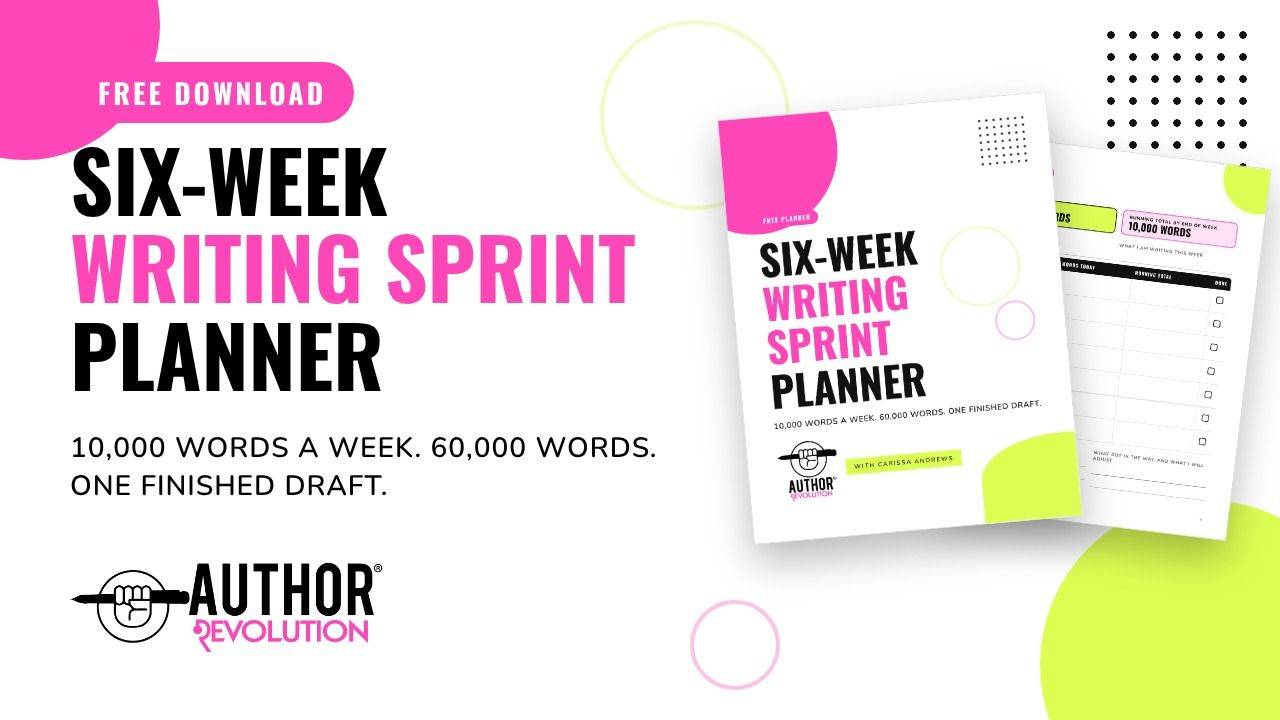
Free download
Six-week writing sprint planner
A printable planner for the six-week sprint I teach: about 10,000 words a week toward a 60,000-word first draft.
- Set up your book, your dates and your writing days
- A page for each of the six weeks, with a daily word log
- A finish-line page for what worked and what's next
It lives in your dashboard, so you can print a fresh copy for every book.
Keep learning how I teach
Short, practical posts on planning a series, finding a pace you can keep, and getting your books found.
- Oct 21, 2026How Many Books Should an Indie Author Publish a Year?Argues there's no single right publishing pace. It offers a five-step calculation for finding a sustainable schedule.Read the post
- Oct 14, 2026NaNoWriMo Is Gone: Your Best Options for November 2026Explains that NaNoWriMo closed in 2025 and lists current November writing challenges. It recommends a six-week sprint as an alternative to a one-month word-count goal.Read the post
- Oct 07, 2026Why Indie Authors Are Hard to Discover (and It's Not Your Fault)Attributes declining discoverability largely to platform algorithms outside authors' control. It suggests building owned channels, making series easy to find through search, and keeping a sustainable pace.Read the post