A NOTE ABOUT THIS EPISODE
I recorded this episode in October 2020, during the pandemic and in the middle of Preptober. NaNoWriMo shut down in 2025, and my plans for that year, the NaNoWriMo site resources and buddy invite, and the Facebook group invite are out of date. The advice to start small and build experience still applies.
SUMMARY
I talk about when I first heard of rapid releasing, about five years before recording, and how Amanda Hocking inspired me. She began publishing in March 2010 and had rapid released six titles by the end of that year. The concept made sense to me from a business perspective: the more eggs you have, the safer you are.
The question is how you get there. In my experience it comes down to walking before you run. You need to hone your craft so you can write and publish on a consistent timeline, and the only way to build that experience is by doing it.
That's where NaNoWriMo comes in. I tell the story of my first NaNoWriMo in 2010, when I'd never written a book. I hit 50,000 words and kept going, and my first draft came in at about 105,000 words before it was edited back to about 72,000. I say it's a way to boost your confidence and to test the waters of rapid releasing, with accountability and community.
I share my prep plans for that year and close by saying that even if your idea of rapid releasing is a book a year, writing and publishing get faster the more you do them.
WHAT YOU'LL LEARN
- Why I say rapid releasing makes sense from a business perspective
- Why building your craft by doing comes before speeding up
- How my first NaNoWriMo boosted my confidence
- Why a writing challenge can help both new and seasoned authors
- Why even a book a year counts as a start
UPDATE FOR 2026
NaNoWriMo shut down in 2025, but the idea still works: pick a stretch of time, write a first draft, and see what pace you can hold. For ways to do that now, see What can you do instead of NaNoWriMo? and the NaNoWriMo alternatives blog post. Today I teach rapid release as a pace you set, and I teach a six-week writing sprint as a way to practice it.
KEEP LISTENING AND READING
- What are the best NaNoWriMo alternatives?
- What are 5 tips for taking on NaNoWriMo?
- What is rapid release publishing?
- Is rapid release right for your books?
WANT THE FULL PLAN?
Rapid Release Roadmap walks you through the six-week sprint and a pace of about four books a year. You set the pace. If you'd like everything I teach, the Library Pass opens all 23 masterclasses for a one-time $97.
FREQUENTLY ASKED QUESTIONS
How do you start rapid releasing?
I say it comes down to walking before you run. Hone your craft so you can write and publish on a consistent timeline, and build that experience by doing it.
Why does rapid releasing make business sense?
I say it's all about eggs and baskets: the more eggs you have, the safer you'll be.
Can a writing challenge help you test rapid releasing?
I say NaNoWriMo was the single best way I know to dip your toes into rapid releasing, because it asks you to write a first draft in a month. NaNoWriMo shut down in 2025, but you can set up your own challenge.
How long did your first NaNoWriMo novel take?
I hit the 50,000-word mark in November 2010 and kept going. My first draft came in at about 105,000 words and was edited back to about 72,000.
Does a writing challenge still help seasoned authors?
I say yes. I mention accountability, tracking your daily word counts, a graph that grows with you, writing groups, and support from other writers.
What if rapid releasing for me just means one book a year?
I say that's fine. Even if your idea of rapid releasing is simply a book a year, it's worth getting a big part of that process underway, because writing and publishing get faster the more you do them.
Read the full transcript
Edited for readability. Passages from the original recording that are out of date have been left out and are marked in brackets.
Welcome back to the Author Revolution Podcast. I'm your host, international bestselling indie author Carissa Andrews and CEO of Author Revolution. The indie author source for all things Rapid Releasing. So speaking of Rapid Releasing.
When was the first time you ever heard of it? Do you remember? Was it a year ago? A month ago today in this podcast.
Well, I first heard of the term rapid releasing about five years ago, but I was also familiar with the concept even before that, even though it really didn't even have a name, come to think of it. Amanda Hocking, a fellow native Minnesotan, I might add, broke through a noisy online market space and started earning six and then seven figures for herself by writing and releasing her books quickly. She pretty much blew up the indie author market. She began publishing her books in March of 2010, and by the end of the year she had rapid released six titles.
While the term rapid releasing hadn't quite become so concrete as it is now. I'm sure news outlets probably marveled at her speed and used descriptors that were very similar. Now, Amanda Hocking success inspired me to consider the indie publishing realm. At that time, I hadn't quite gone that far.
I was just beginning to write, in fact, to give you some perspective. I was just beginning to write. And in October of 2010. However, I really wasn't sold on the endeavor of self-publishing just yet.
That actually came a couple of years later, if I'm being honest with myself. At the time, self-publishing was really far less mainstream and more closely associated with those guys trying to open their books from the trunk to their trailers, if you get what I mean. No one was taking it seriously just yet. Not even me.
However, I can tell you that from the moment I heard about Rapid Releasing as a concept, I knew it made perfect sense from a business perspective. It's all about eggs and baskets. The more eggs you have, the safer you'll be. And we could all use a little bit of safety right now, don't you think?
But the real question boils down to how do you even get there? How do you get to the point where you can speed up your creativity, let the words flow onto a page and deliver your books on a consistent timeline. Well, in my experience, it really does come down to walking before you run. You need to hone your craft so that you're able to get everything accomplished without tripping over your story creation, knowing how to perfect your characters, story arcs, and theme.
All of that, though, comes from experience, and the only way to build experience is through doing. We're currently sitting in the most perfect time to dip your toe into Rapid Releasing. In fact, if I had to tell you the very, very first time, my eyes were open to the concept that I could write a book quickly. It was a full ten years ago and had nothing to do with Amanda Hocking it all.
In fact, it had everything to do with a little thing called NaNoWriMo. Yes, my friends, it is that time of year again. National Novel Writing Month is coming up in just a few weeks, and in my humble opinion, it is the single best way to dip your toes into the world of rapid releasing. Why?
Because the whole concept of NaNoWriMo or National Novel Writing Month, for those of you who are newbies, has to do with writing the first draft of a novel within a month. Now, ten years ago, this was a shocking concept to me. Write a novel in a month. Are they mad?
Of course. That's when my competitive streak kicked in and I was like, whoa, ha ha ha! I'm going to do it. I'm going to write all the words.
And you know what? As a 100% newbie writer, I had never written a book in my entire life, but I hit the 50,000 word count mark, which is NaNoWriMo goal, and I kept going. My finished first draft actually came in at about 105,000 words. Of course, it was edited back to about 72,000, but the point was I hit that 50,000 word mark in November in that month, and I finished a full novel in three.
I probably would have done it faster had Thanksgiving and Christmas actually not fallen in there. But you know, it happens at life. Now, does it mean that that book was perfect? Oh hell no.
I was a newbie writer, remember? I fumble around with what to do afterwards. I didn't know if I'd done it right, you know, after all. I mean, I didn't even know about story arc.
Did I have a story arc? What is a protagonist? Antagonist? Climax.
Resolution? What are these words that are coming at me? Thankfully though, since then I have gotten much better, much faster, and more adept at writing fiction. Plus, I do happen to know those words now too.
And you will as well. But you have to start somewhere. Now, one of the biggest reasons I think NaNoWriMo is such a huge win for people who want to rapid release, especially if they're just starting out too, is because it can boost writer confidence. And that's really what this is all about, right?
It's what we're looking for, encouragement that we can succeed at something that we enjoy. It certainly was that for me when I finished NaNoWriMo in 2010 and hit that 50,000 word mark goal. I knew I could do this. I knew I could write and publish quickly, especially when I got those cats herded and I could learn my craft a little bit better.
Now, as of the recording of this episode, we're sitting in the middle of October October 13th to be exact. Now that places us smack dab in the middle of what nano peeps call Preptober. Yes, it's Prep and October smushed together. Now, if you're looking for some tips on how to take on NaNoWriMo, check out the episode I did last year called five Tips to Take on NaNoWriMo.
You can find it over at authorrevolution.org/2. Or head over to today's show notes and I'll have a link for you there, too. Now, in it, we do talk about five tips that you can use to get yourself ready to take the challenge of NaNoWriMo. In addition, you can also head over to nanowrimo.org, and go into your Writer's Resources tab for a whole host of information that can help you plan and prep your NaNoWriMo novel.
I don't even believe you have to sign up, because I didn't sign up for NaNoWriMo the very first year that I joined. In the process of it. For whatever reason, I decided to do it on my own, and I didn't join the site. But whatever your biggest challenges are when it comes to prep and writing, you're going to likely find something in there resources that will help you out.
Now, for those of you who are old hats at writing, does NaNoWriMo still help you? Well, allow me to lay out my plans and you can decide for yourself. First, though, before I start in on this year's plans, I will say that of the ten years I have been writing professionally, I have participated in NaNoWriMo seven times. So there's that.
Now, last Friday, I wrapped up writing the four part rapid release series The Windhaven Witches. That means I am right in between projects right now, making it the perfect time to take on Nano again and get myself in the right mindset to start something completely new. Well, not completely new, because it's a world that I've already started to develop through Diana Hawthorne. So speaking of her, my plan is to work on the prep needed to create the next five books in the Diana Hawthorne Supernatural Mysteries series, for the next 2 to 3 weeks, I'll be doing all the things so that I'm ready to hit November with writing.
The prep work that I have to go through includes taking each character and expanding their character sheets, developing the story ideas for the series, generating the plots for each book, and skeletal outlining each book. Then I'll probably do a full outline for amends, which is the next book in the series, and this really means going into a full chapter by chapter synopsis, so that I know what I'm going to be accomplishing throughout the journey of the book. Now, it wouldn't take me so long, probably to do this prep, but with the creation of Rapid Release Roadmap also happening, I need to balance my time and not kill myself. I'm sure you understand that concept.
Okay, so to answer the question, does NaNoWriMo help seasoned authors? Obviously the answer is yes. Every year, their resources get better and better, and you'll be able to level up your writing. But more than that, it's also an accountability thing.
You can track all of your daily work counts as you're writing them, and then you get to see this cool graph that grows with you as you're getting your novel laid out. I mean, who doesn't love to see that sort of thing, right? Plus, you can create writing groups within the platform and invite all of your besties to it. Or you can join an actual writing group that's already there, whether it be local or whether it be one that maybe, you know, other authors out in the community and you guys band together and create your own group that way.
It's all about support. I have met some really cool people through NaNoWriMo, and you can do so much together when you're able to kind of hash out what's working, what's not working, and kind of commiserate a little bit about the process. It's a lot more fun that way. Now, in normal years, there are usually events going on to write ins, parties, and so much more.
There's a ton of ways to make NaNoWriMo a fun month of writing exploration. This year, it might be more of a challenge because of the whole pandemic, but I'm sure that there are going to be plenty of online versions that will be available to people to be able to participate in. So testing the waters of rapid releasing might seem a little scary at first, but it's far more manageable when you have a whole community doing it with you at the same time. And that's really part of the reason why NaNoWriMo is such a good way to do the dabbling with this concept, and to learn how to get yourself focused enough to be able to write quickly.
Because, let's face it, writing is really the hardest part. It's the longest part of your journey when it comes to getting that book in place to be able to market it. And I think I've mentioned this before, but all things do get easier the more you do them. With repetition, writing and publishing a book gets faster and faster if you want it to.
So even if your idea of rapid releasing is simply a book a year, November is the month to get a big part of that process underway. All right. I hope this gives you some insights to mull over, and I hope you'll be able to join me in November for NaNoWriMo.
[Out-of-date promotional section from the original recording removed.]
All right, my writerly friend.
That's it for this week. I want you to go forth and start your author revolution.
LISTEN TO THE PODCAST
Listen on Buzzsprout or find it on your favorite podcast platform.
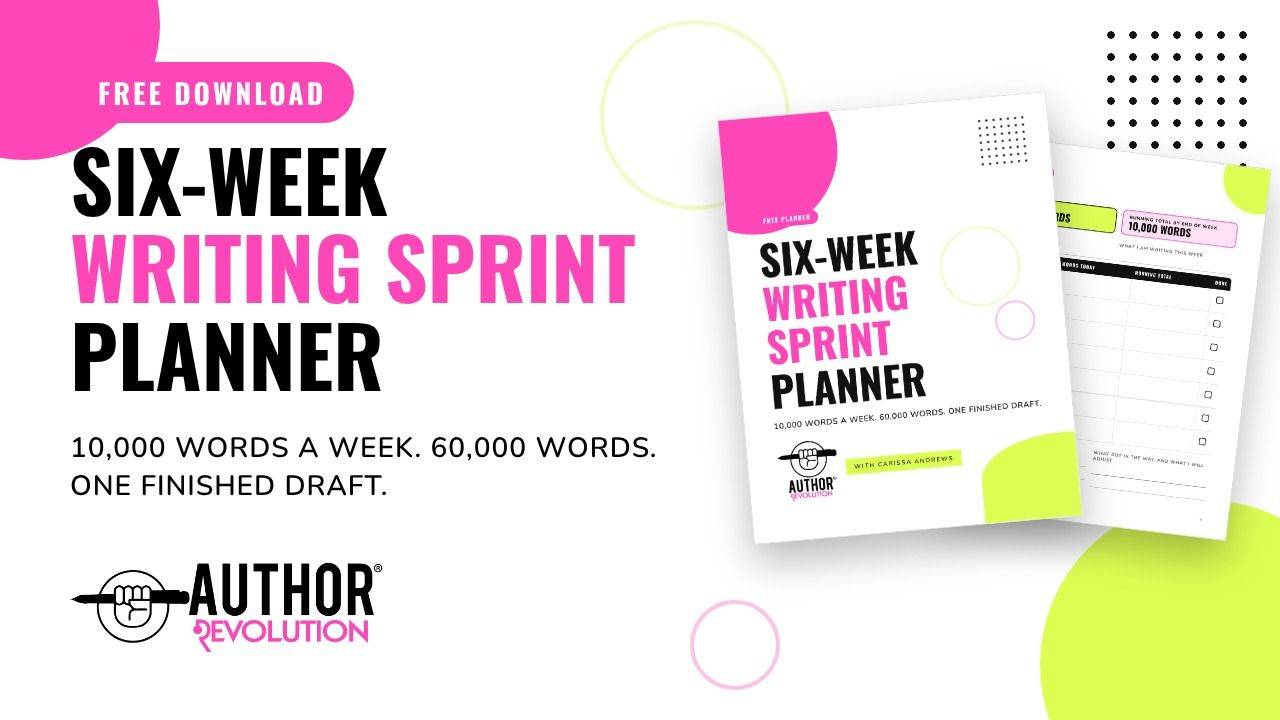
Free download
Six-week writing sprint planner
A printable planner for the six-week sprint I teach: about 10,000 words a week toward a 60,000-word first draft.
- Set up your book, your dates and your writing days
- A page for each of the six weeks, with a daily word log
- A finish-line page for what worked and what's next
It lives in your dashboard, so you can print a fresh copy for every book.
Keep learning how I teach
Short, practical posts on planning a series, finding a pace you can keep, and getting your books found.
- Oct 21, 2026How Many Books Should an Indie Author Publish a Year?Argues there's no single right publishing pace. It offers a five-step calculation for finding a sustainable schedule.Read the post
- Oct 14, 2026NaNoWriMo Is Gone: Your Best Options for November 2026Explains that NaNoWriMo closed in 2025 and lists current November writing challenges. It recommends a six-week sprint as an alternative to a one-month word-count goal.Read the post
- Oct 07, 2026Why Indie Authors Are Hard to Discover (and It's Not Your Fault)Attributes declining discoverability largely to platform algorithms outside authors' control. It suggests building owned channels, making series easy to find through search, and keeping a sustainable pace.Read the post